After the death of a loved one, the heirs often have to take care of a great many things in a very short amount of time. One of those matters is deciding what to do with the household belongings after the death. In my work, I’ve noticed that this is one of the most difficult aspects for the bereaved. A home is often left full of belongings that hold memories. That’s why it can be hard to decide right away what to do with everything. Fortunately, you don’t have to decide everything all at once. By sorting through the household belongings, you’ll gain a much clearer overview and be able to determine the best course of action for each item.
Household Belongings After Death: What Are the Options?
In practice, we see that household belongings are often divided among five options: keeping or distributing them, selling them, donating them, storing them temporarily, and having them disposed of. The approach varies for each set of household goods, as it depends heavily on the value of the items, the family’s wishes, and how much time is available.
Be careful with items from the home
Before you start distributing, selling, giving away, or disposing of items from the home, it is very important to first check how the estate is being settled. What you do with these items can affect how the inheritance is accepted or renounced. It’s a good idea to consult your notary about this. You can find more information in our article: Clearing Out a Home After a Death: Who Is Responsible?
What counts as household goods?
When we talk about clearing out a home, by “household goods” we mainly mean the individual items inside and around the home. Examples include:
- Furniture
- Individual lamps
- Clothing
- Tableware
- Wall Decor
- Rugs
- Electronics
- Tools
- Etc.
We generally do not count fixed items, such as built-in cabinets, plumbing fixtures, or permanently installed flooring, as part of the movable household goods.
What to do with the personal belongings after a death
Distributing the personal property among the heirs
Often, the first step is to divide some of the household goods among the heirs. Personal items, in particular, often go to family or friends. These items usually don’t have a high resale value, but they are valuable to family and friends. You can also divide up items in good condition that others can still use, such as furniture. It often saves a lot of work if part of the household goods can be distributed in this way.
Selling household goods after a death
Household goods often don’t have a very high resale value. Still, certain items can still be worth some money. Think, for example, of furniture, jewelry, art, collections, or designer items. You can choose to sell these items privately, but you can often also work out an arrangement with a home clearance service. In some cases, valuable items can be deducted from the total price.
Donating or Giving Away Household Goods
Items you can’t sell are sometimes still perfectly usable by others. You can often donate or give away these items. Think of clothing, dishes, small pieces of furniture, books, etc. For example, you can take them to a thrift store or a local charity. You can also offer items for free on sites like Marktplaats or Facebook Marketplace. People often still come to pick up a lot of these items. That helps out!
Temporary Storage for Household Belongings
Sometimes a home needs to be vacated on very short notice, while there are still many decisions to be made about your belongings. In such cases, temporary storage (self-storage) can be a convenient interim solution. This gives you some extra time to figure out exactly which items you want to keep, give away, or sell. This can be especially helpful if, for example, family members live far away, if there are a lot of personal belongings, or if, for instance, a rental property needs to be vacated quickly.
Do try to sort through your belongings in advance, though. Storing an entire household’s worth of items can be a lot of work and can get expensive.
Have Household Goods Picked Up or Hauled Away
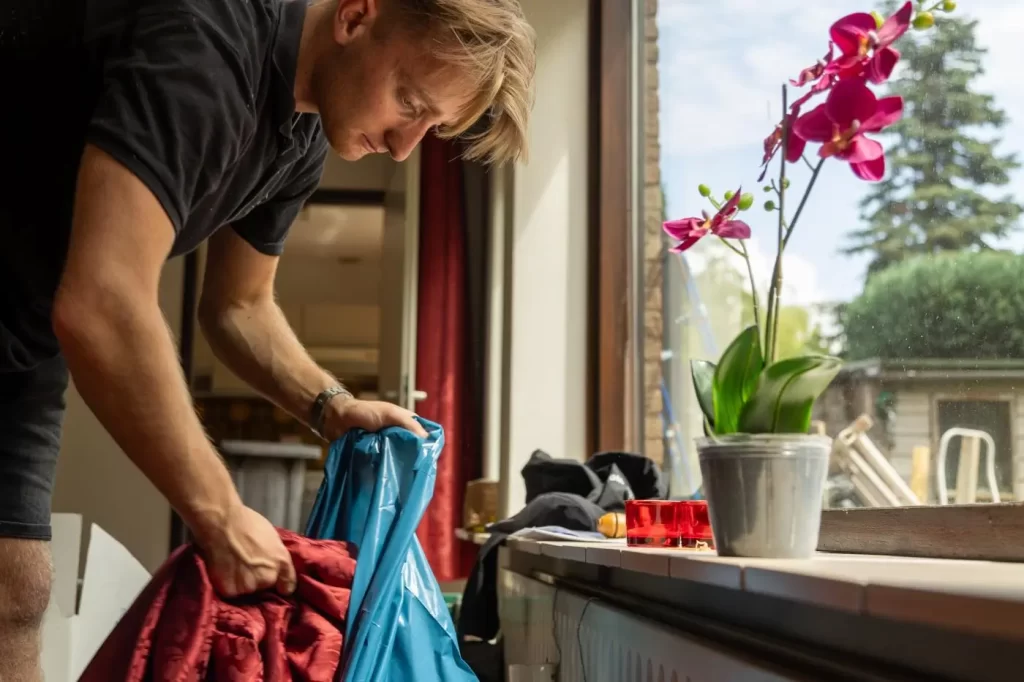
After sorting, selling, and donating, there’s always some household items left over. Think, for example, of older or worn-out furniture, broken electronics, mattresses, carpeting, etc. You can take these items to the recycling center yourself, but you can also have the remaining household goods picked up by a house-clearing company.
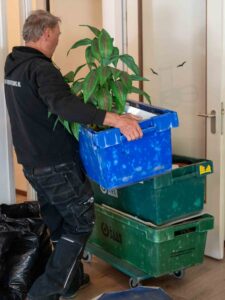
The advantage of hiring a professional clearance service is that it saves a lot of time and effort. In my experience, the amount of work involved is often underestimated, because it’s not just a matter of removing furniture from the home—you also have to consider smaller tasks such as removing light fixtures, taking up flooring, making repairs, and so on. On top of that, the home still needs to be cleaned.
Things to Keep in Mind When Renting a Home
When renting a home, a landlord often has specific requirements regarding the condition of the property upon move-out. These may include, for example, removing:
- Flooring and Subfloors
- Curtains and curtain rods
- Screws, anchors, and nails
- Items from the shed, storage room, or yard
- Trash and leftover materials
Ask the landlord for a move-out checklist in advance and, if possible, schedule a pre-inspection. That way, you’ll know exactly what needs to be removed or repaired. This will help you avoid extra costs or delays when returning the keys. Want to learn more about this? Be sure to check out our blog post on handing over a rental property.
Help with Household Belongings After a Death
Clearing out a home after a death often takes a lot of time. Once you’ve sorted out which items you want to keep, donate, sell, or discard, my team and I can help you clear out the home. We’ll leave the home swept clean so you don’t have to worry about it anymore. We’re always happy to stop by for a no-obligation visit to assess the contents and discuss your needs with you. Afterward, you’ll receive a clear quote with a fixed price, so you’ll never face any surprises.
Frequently Asked Questions About Personal Belongings After a Death
What’s the best way to handle household belongings after a death?
Start by setting aside personal and valuable items. You can divide these among family members. The remaining household goods can be sold, donated, temporarily stored, or picked up.
How do I know if the household goods still have any value?
You can have an expert appraise someone’s household belongings. You can also compare furniture on sites like Marktplaats to see if any of it is still for sale. If you still have valuable items, their value may be partially offset against the cost of the house clearance.
Where can I sell household items after a death?
You can sell individual items on platforms like Marktplaats or Facebook. If you hire us, we can also check to see if certain valuable items can be used to offset the cost of the cleanup.
Can I also have the entire household contents picked up?
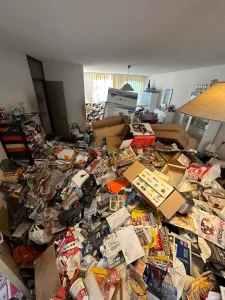
Yes, once you’ve removed the items from the home that you wish to keep, we can pick up the remaining household goods. This applies even if there are still a large number of items or, for example, in the case of collectors.
Can I take personal belongings right away after a death?
Be careful with this, especially if it’s not yet clear how the estate has been accepted. Taking or selling items can have legal consequences. Read our explanation of this in our article: Clearing Out a Home After a Death: Who Is Responsible?
Disclaimer: The information in this article is based on our own experience with home clearances and is intended as general information. We do not provide legal, notarial, or financial advice. If you are unsure about accepting, rejecting, or settling an inheritance, always consult a notary or other expert.