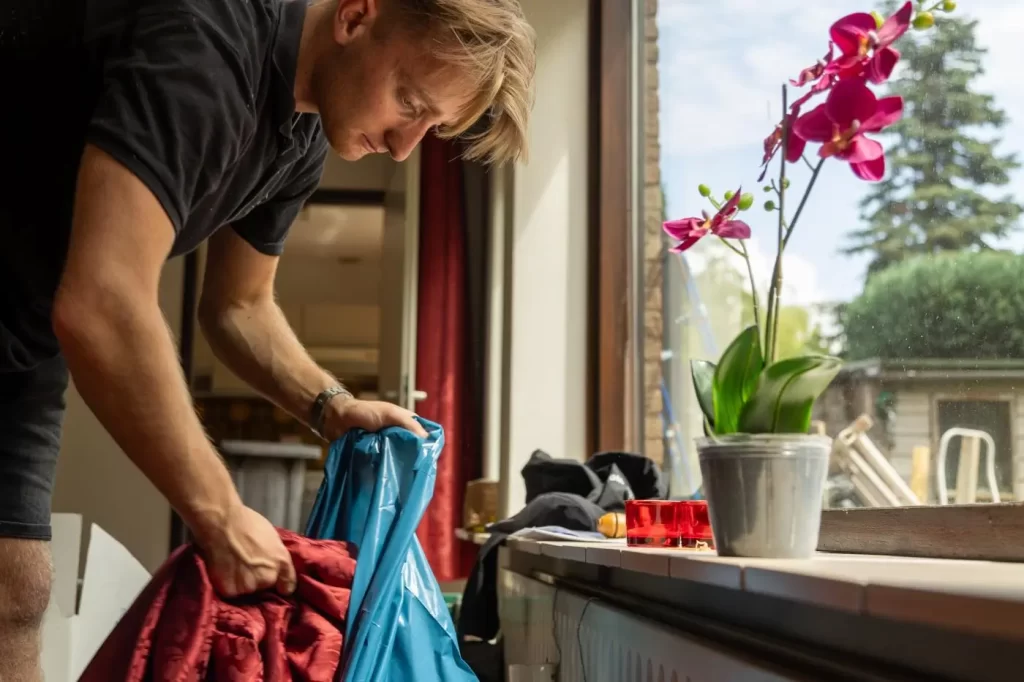
After the death of a loved one, you often have a lot to deal with. While you’re trying to cope with your grief, there are also practical matters that need to be taken care of. These include the funeral, administrative tasks, and often clearing out the home. But who exactly is responsible for clearing out the home after a death?
Short answer: In most situations, the responsibility for clearing out the home falls to the heirs who are receiving the estate. Who exactly is authorized to make decisions depends on the will, but also on how the inheritance is accepted.
Who is responsible for clearing a house after death?
Officially, the heirs are responsible for clearing out the home after a death. Often, these heirs are named in the deceased’s will. If the person did not draw up a will, then the law of inheritance determines who the heirs are. Therefore, it is not necessarily the case that every immediate family member is responsible for clearing out the home.
If there are multiple heirs, you must work together to have the house cleared out. In some cases, an executor is appointed to handle certain matters related to the estate.
Before you divide up the belongings or clear out the home, it is important that you know exactly who the heirs are and how the estate will be accepted.
Dismissing inheritance
In some cases, people choose to renounce the inheritance. This means that someone completely waives their right to the deceased’s estate. This can happen, for example, if the deceased leaves behind debts. If the heirs choose to renounce the inheritance, they are no longer heirs and are therefore no longer responsible for clearing out the home.
Responsibility then passes to the next person in the legal line of succession. If you’re not sure what “renouncing the inheritance” means in your situation, always consult a notary before making any decisions regarding the estate’s assets.
Accepting an Inheritance Purely or Beneficially
In addition to renouncing the inheritance, there is also the option to accept the inheritance outright or under the benefit of inventory. With an outright acceptance, you accept everything—both the assets and any debts of the deceased. With conditional acceptance, you do become an heir, but you are not automatically liable for any debts. First, the assets and debts are assessed. The debts are then paid off from the estate. If anything remains, it can be distributed among the heirs.
If you haven’t made a decision yet, be careful about selling, distributing, or taking any belongings from the home for yourself. First, decide how you want to handle the estate. Consult your notary and check, for example, the Dutch government website.
Responsible for clearing house after death? Here’s what’s involved
When you are an heir and therefore responsible for clearing the property after death, there are a few things involved. It also varies whether the deceased owned a home for sale, or rented a home.
Responsibility for vacating rental property
If the deceased lived in a rental property, it is smart to arrange the emptying of the house as soon as possible. This is because the rent continues until the property is returned to the landlord. For the delivery of a rental property you often have to follow certain guidelines. If you want more information about this, you can read our article: How should I deliver my rental property? Or you can contact us. We are specialists in delivering rental ready properties.
Responsibility for vacating an owner-occupied home
When the deceased owned an owner-occupied home, there is often a little less urgency in the eviction process. There is, however, a little more involved than when delivering a rental property. The house or apartment must be made ready for sale. So in addition to clearing the house, you may have to do some minor repairs to increase the value of the home. Also, of course, you need to arrange the selling process with a real estate agent.
Frequently asked questions about clearing a house after death
What does a house clearance after death cost?
What the exact cost of a house clearance after death will be depends on a number of factors. For example, the size of the house and the amount of belongings. Want to know more about the cost of a house clearance and the average cost for each type of home? Then check out our article: What does a house clearance cost?
As an heir, am I obligated to vacate the house?
In principle, yes. If you accept the inheritance, you must also vacate the property. This can be alone or together with the other heirs.
How long does it take to vacate a property?
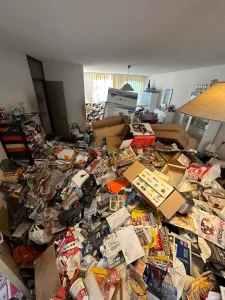
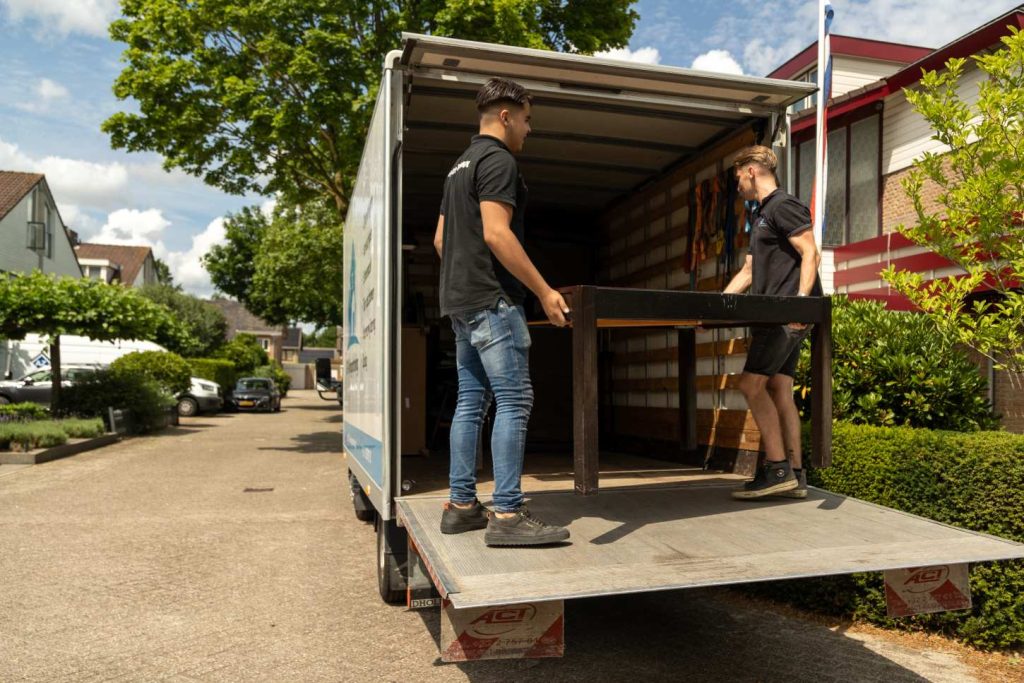
It depends on the size of the home and the amount of belongings. This can range from one day, to several weeks. If you want to be assured of a quick eviction, it is best to hire a professional. We specialize in emergency evictions and are happy to help. We always allow for urgency or a short completion time.
What happens to the belongings in the home?
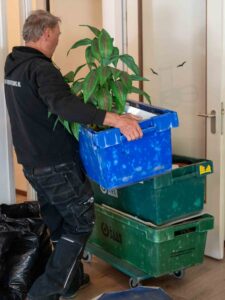
Once you have taken all the things out of the house that you want to own or sell, we will take the rest. Some of the stuff is disposed of and processed. But we often take usable items to thrift stores or give them a second life.
How do you know if you are responsible for clearing the house after death?
If you are the direct heir and have accepted the inheritance, you are responsible for clearing the property after death. Not sure if you will be held responsible for this? Then you can also call the notary to check.
Help with Clearing Out a Home After a Death
Would you like help with clearing out a home after a death? We offer specialized services to support you in this process. We’re happy to help you through this difficult time by taking some of the work off your hands. Not only do we ensure that the home is completely cleared out, but we can also handle minor repairs, deep cleaning, and more. This way, you only need to hire one company, and everything is taken care of as quickly and easily as possible. Contact us for a free quote.
This page is intended to provide general practical information and is not a substitute for legal advice. For official legal information, always contact your notary or visit the Rijksoverheid website.