What is hoarding?
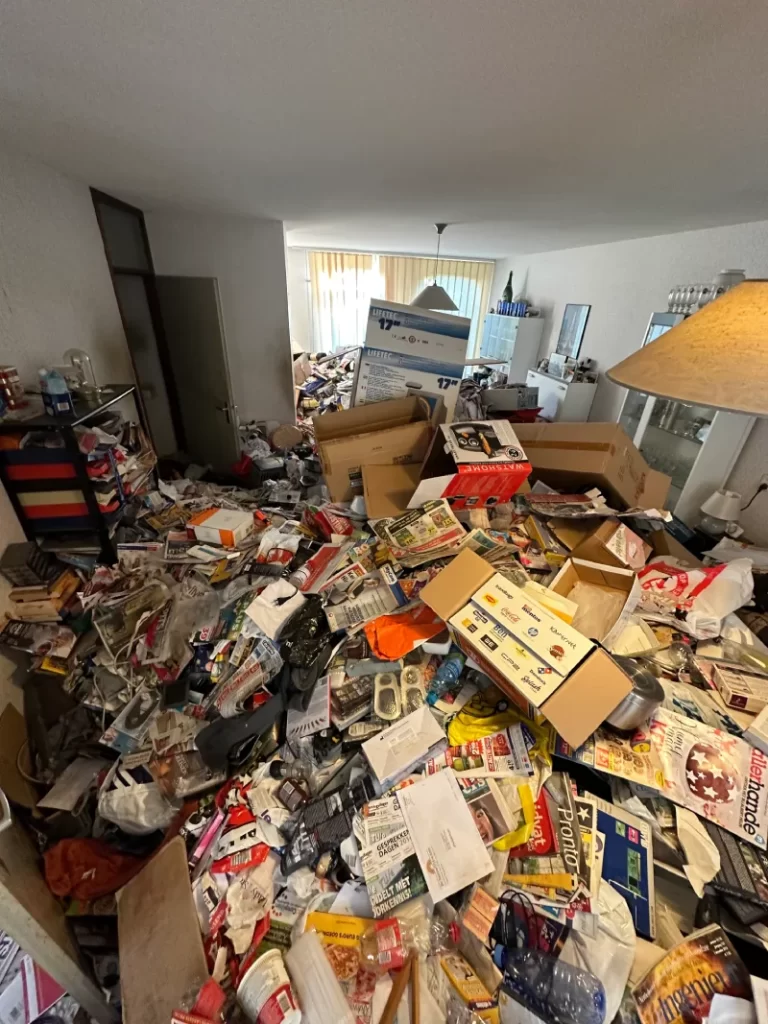
Hoarding is a collecting disorder in which people have a compulsive need to keep things and find it very difficult to throw things away. It is not about someone who simply has a lot of stuff, but about people who find it extremely difficult to throw things away, with the result that their entire home becomes crammed full. In practice, it often starts off quietly and gradually gets worse, until sometimes the whole house is full.
Hoarding almost always has a psychological or emotional cause. It is also extremely difficult for someone with hoarding to resolve this problem entirely on their own. It must therefore always be taken seriously, and the resident must be helped in a respectful and calm manner.
In my work as a house clearance specialist, I come across this regularly. For example, we see homes where rooms can no longer be used and where pathways have been created between piles of belongings. This can lead to unsafe and unhealthy situations. We regularly help by removing surplus items to make the home liveable again.
Characteristics of hoarding
In cases of hoarding, there are certain signs that are almost always present:
- Great difficulty in throwing things away
- Overcrowded rooms in the house that are no longer functional
- Strong emotional attachment to a great many possessions
- Stress or panic at the thought of getting rid of things
- Shame, which, for example, leads people to stop allowing visitors
- Social isolation
Why someone with hoarding needs help
Hoarding is a complex problem. For someone affected by it, it is often very difficult to resolve the issue entirely on their own. That is why outside help is often necessary. It is also important not to wait too long before seeking help, as hoarding can have an impact on the resident’s health and safety. Examples of this include:
- Safety: increased fire risk and blocked passageways
- Physical health: mould, pests and severe pollution
- Mental health: hoarding often leads to shame, stress and isolation
- Liveability: a property can become unliveable and may also sustain damage
How can you help someone with this?
Helping a hoarder requires a careful approach. Simply popping round to help tidy up is often not enough. To resolve the situation, it is often necessary for the resident to discuss their situation with family or a professional. In this way, the resident can gain an understanding of the problem in a supportive manner, whilst also working towards a solution. This solution often involves tidying up and getting rid of belongings step by step.
Professional help is often sought when clearing out a house. This might include, for example, a professional organiser or a house clearance service. We ourselves often help with clearing out cluttered homes. We always start by having a calm discussion with the resident and drawing up a plan together. We decide in advance exactly what can be thrown away and what needs to stay. Read more here about how we can help with clearing out a hoarder’s home.
Step-by-step guide to helping with hoarding
1. Assess the situation
We’ll pop round to discuss the situation. Together, we’ll work out which rooms need attention, which items are important and where the priorities lie. Based on that, we’ll draw up a clear plan.
2. Small steps
When dealing with hoarding, it is important not to try to sort everything out in one go. That is why we take it step by step. This keeps things manageable and reduces stress for the resident.
3. Sorting stuff
This is often the longest and most important step. Here, you need to sit down together calmly and go through all your belongings, deciding which ones to keep and which ones might be best to get rid of. What you need to avoid here is ending up with too many items in the ‘keep’ pile.
This step is often carried out with family members or other people the resident trusts.
4. Getting rid of unnecessary items
Once it is clear which items are to be kept and which can be disposed of, we can remove the items. The items are disposed of responsibly or given a new lease of life.
5. Cleaning
Simply clearing out belongings is not enough. If a property has been very cluttered for a long time, it also needs to be thoroughly cleaned.
6. Aftercare
Once the mess has been cleared up, it is important to prevent the situation from getting out of hand again. Sometimes follow-up appointments, support from family or professional guidance are needed.
What you should definitely not do
There are a number of things you need to bear in mind if you want to help someone with hoarding:
- Never just throw things away without consulting someone first
- Don’t put pressure on the person
- Don’t get angry and don’t judge
- Don’t try to do too much in a short space of time; it’s a process that might take a bit longer
Always treat the resident with calm and respect. It is important to avoid arguments or distress in situations like this.
Frequently Asked Questions
Can someone stop hoarding on their own?
People rarely stop hoarding on their own. Help is often needed from professionals or family members. It is important to talk to the person concerned in a calm manner and draw up a plan to find a solution. This should be done step by step and calmly, without putting too much pressure on the person.
What should you do with a hoarder’s belongings?
It’s often the case that a lot of the items need to be thrown away. It’s a good idea to hire a clearance service for this. That way, all the items are disposed of responsibly, and some of the usable items are even given a new lease of life.
If you can’t get rid of a lot of stuff all at once, people sometimes use a storage unit.
When should you seek professional help for hoarding?
As soon as possible. When a home becomes unliveable due to the amount of belongings, it is important to take swift action. As this affects the occupant’s health and safety, it is vital to act quickly. It is often effective to draw up a plan with family or other trusted people and sort through the belongings. It is then best to engage a professional service to remove the surplus belongings.